How much does tree removal cost?
Typical U.S. prices run from a few hundred dollars for a small tree to several thousand for a large tree near a house. Height, access, and condition all matter, so get a written quote.
Tree removal referrals for Phoenix homeowners
Request an estimate
A tree that is dead, split, or leaning does not stay the same. It gets weaker as days and weeks pass. Wet wood gets heavier. Roots keep pushing. A small problem can turn into a roof, wall, or fence repair. Pantsmemory Tree Service helps you act at the right time.
Pantsmemory Tree Service is a referral service. We connect homeowners in Phoenix and the Phoenix area with independent local providers who do the cutting and hauling. You tell us about your tree, and providers in our network send written quotes. You compare them, ask questions, and pick the one that fits your budget and your yard. There is no obligation to hire anyone.
If this is your first tree removal, relax. The process is simple once you know the steps. Most of the stress comes from two questions: how fast does this get worse, and what is a fair price?
Pantsmemory Tree Service does not cut trees. We connect you with independent providers in our network. Each one sends a written quote, and you compare them side by side.
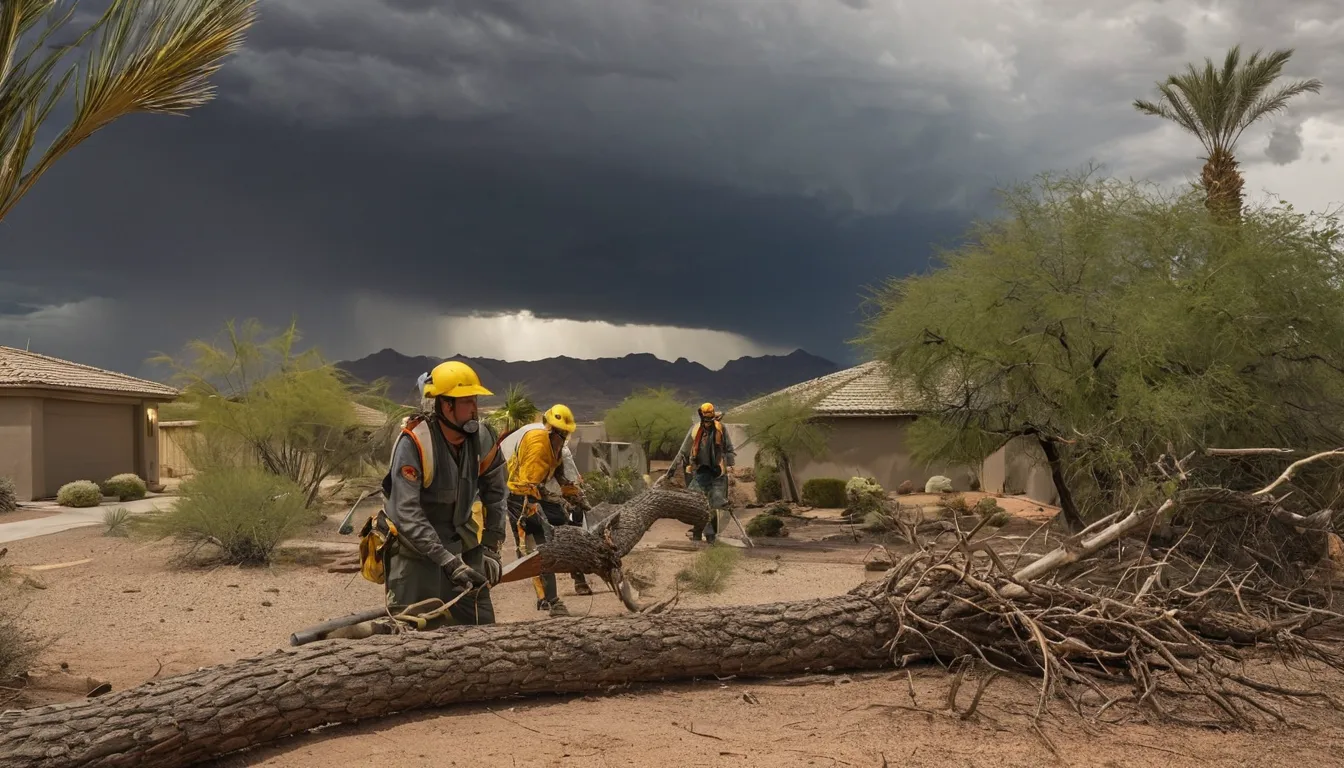
A tree that just split, leaned, or dropped a big limb is unstable. In the first hours, the main risk is people and property. A loose limb can fall without warning. Keep kids and pets away. Do not stand under it. If any part touches a power line, stay back and contact the utility.
Take photos from a safe distance. They help with quotes and with any insurance claim.
Wet wood gets heavier. A cracked trunk can shift more. A tree resting on a roof or fence can press harder each day. A small crack in stucco or a slipped roof tile can grow into a bigger repair.
This is also when a monsoon storm can finish the job. If a damaged tree is close to your home, a provider can tell you if it needs to come down soon. For a tree that is already down, many providers offer storm tree clearance and can often respond quickly.
A dead or dying tree dries out and turns brittle. It gets harder to cut safely, and that can raise the price. Roots under a slab can lift or crack concrete. Waiting is not always wrong. But a planned removal usually costs less than a rushed one.
The reasons are usually practical. Here are the common ones:
Some trees can be saved with trimming. Ask the provider to explain why removal is needed.
A provider looks at the height, trunk width, lean, and health of the tree. They also look at what sits below it, such as roofs, walls, fences, and lines. Then they send a written quote.
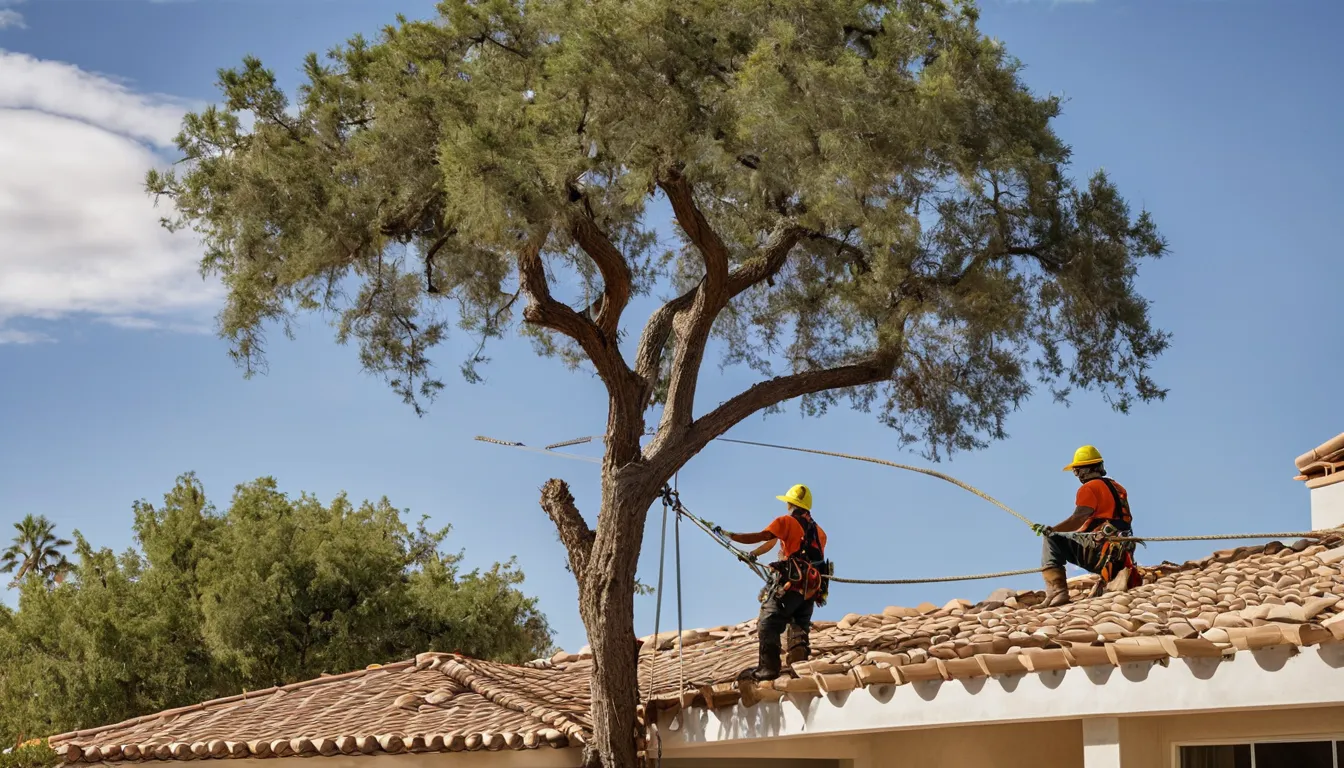
Small trees may come down in one piece. Tall trees are usually cut in sections and lowered with ropes. Some jobs need a crane. Tight lots in newer subdivisions often need this slower, careful method.
Brush is chipped. Logs are cut up and hauled off, or left if you want firewood. The stump normally stays unless the quote says otherwise.
Price follows risk and effort. A tall tree over a roof costs more than a short tree in an open yard. Access matters too. If a truck cannot reach the tree, the work takes longer.
Ask each quote to list cleanup, hauling, stump work, and any extra fees. A low number that leaves out cleanup is not really low. See the cost table on this page for typical U.S. ranges.
Some cities protect large or older trees and ask for a permit before removal. Many subdivisions also have HOA rules. Ask the provider if a permit applies. Check with your city and HOA before the work starts.
Very hot, dry summers stress trees. Then sudden monsoon wind and heavy rain hit weak limbs and loose soil. A tree that looked fine in spring can fail by late summer. A quick yearly look at your trees can save money.
Request a callback to check provider availability if a tree is already in danger.
A good provider answers questions plainly. Here is what to ask:
Be careful with anyone who knocks on your door after a storm and asks for full payment up front.
Get two or three quotes for the same scope. Do not pick on the smallest number alone. A very cheap bid may skip cleanup, insurance, or care around your roof and walls.
Move cars, grills, and patio furniture away from the tree. Clear a path to the work area. Tell your neighbors. Mark sprinkler lines and heads. Keep pets inside. Confirm the start window and what the quote includes.
Walk the yard with the provider. Check the roof, fence, and stucco for marks. Look at irrigation lines. Then decide what to do with the stump and the open space.
Keep your quote, invoice, and photos. Some policies may cover sudden damage, so check your policy. Providers can often help document damage for a claim.
Tell us about your tree and request an estimate. Providers in our network will reply with written quotes. There is no obligation.
A provider checks the tree's size, health, lean, and what sits below it before giving a written quote.
Trees are taken down whole or in sections, using ropes or a crane when space is tight.
Brush and logs are chipped, hauled away, or left for firewood, depending on your written quote.
Each provider lists scope and price in writing, so you can compare offers on equal terms.
These are typical U.S. ranges. Your price depends on tree size, access, condition, and what sits nearby. Use them as a guide only, and always get a written quote that lists every item.
| Job type | Typical range | Notes |
|---|---|---|
| Small tree (under 30 ft) | $200 – $800 | Easy access keeps the price down |
| Medium tree (30–60 ft) | $600 – $1,500 | Often cut in sections |
| Large tree (60 ft and up) | $1,200 – $3,000 | Height and trunk width add time |
| Tree near a roof or lines | $1,500 – $5,000 | Extra care and rigging raise the cost |
| Crane use | $1,000 – $3,000 | Added when ropes alone are not safe |
| Haul-away and chipping | $100 – $500 | Ask if it is already in the quote |
Share the tree's size, location, and any damage, and add photos if you have them.
Providers in our network review the details and send quotes for you to compare.
Check scope, cleanup, insurance, and timing. Ask questions before you decide.
Pick the provider you like and set a date. You are never required to hire.
Written quotes show what is included, so you can see what drives the price.
Several providers quote the same job, which helps you judge a reasonable price.
Acting while the problem is small can keep the job simpler and safer.
Independent providers know local rules, soil, and storm patterns in your area.
Request an estimate and a local provider in our network will follow up. Prefer to talk? Request a callback to check provider availability.
No obligationTypical U.S. prices run from a few hundred dollars for a small tree to several thousand for a large tree near a house. Height, access, and condition all matter, so get a written quote.
It depends on your city and HOA. Some protect large or older trees. Ask the provider, then check with your city and HOA before work begins.
A split, leaning, or storm-damaged tree can get weaker as days pass, especially near a roof or fence. Have a provider look at it soon. Request a callback to check provider availability.
Request an estimate and a local provider in our network will follow up. Prefer to talk? Request a callback to check provider availability.
No obligation